Greenland Transatlantic Crisis: Europe Rejects Trump’s “Blackmail”
A major Greenland transatlantic crisis is now unfolding. This follows President Donald Trump’s unprecedented threat to impose steep tariffs on eight European nations unless they support a U.S. takeover of Greenland. Consequently, European leaders are pushing back with remarkable unity against what they label as political blackmail. This move has not only sparked diplomatic fury but poses a critical question: can the alliance survive this dangerous downward spiral? As E.U. ambassadors convene for an emergency meeting, the continent’s defiant message is clear: they will not be intimidated.
The Greenland Transatlantic Crisis: A Unanimous European Rejection
Transitioning from surprise to firm resistance, the response across European capitals has been swift and unusually unified. Swedish Prime Minister Ulf Kristersson set the tone, declaring on X, “We will not let ourselves be blackmailed.” Similarly, French President Emmanuel Macron stated that “no intimidation nor threat will influence us.” This collective stance highlights a significant shift; Europe is choosing confrontation over cautious diplomacy, signaling that Trump’s latest threat crosses a fundamental red line.
The Core of the Greenland Transatlantic Crisis: Sovereignty vs. “America First”
At the heart of this Greenland transatlantic crisis is a stark clash of principles. Specifically, President Trump views Greenland—a semi-autonomous Danish territory—as a strategic asset crucial for U.S. Arctic security and his “Golden Dome” missile defense project. He argues that if America doesn’t control it, China or Russia will. Conversely, Europe sees the threat to annex a peaceful ally’s territory as a direct assault on the very ideals of sovereignty and territorial integrity that underpin the Western alliance. As a result, this fundamental disagreement fuels the standoff. Indeed, as the joint statement from the eight targeted nations declared, “Tariff threats undermine transatlantic relations and risk a dangerous downward spiral.”
Broader Implications: NATO Unity and Global Consequences
Furthermore, this confrontation threatens to fracture the NATO alliance itself. European diplomats openly worry that such coercive tactics against allies fundamentally break trust and embolden adversaries. E.U. foreign policy chief Kaja Kallas voiced a common fear: “China and Russia must be having a field day. They are the ones who benefit from divisions among Allies.” The potential collateral damage is vast, even jeopardizing a pending U.S.-E.U. trade deal, which a key European Parliament leader declared “not possible” to approve under these threats.
Voices from the Ground: Greenland and Business Bear the Brunt
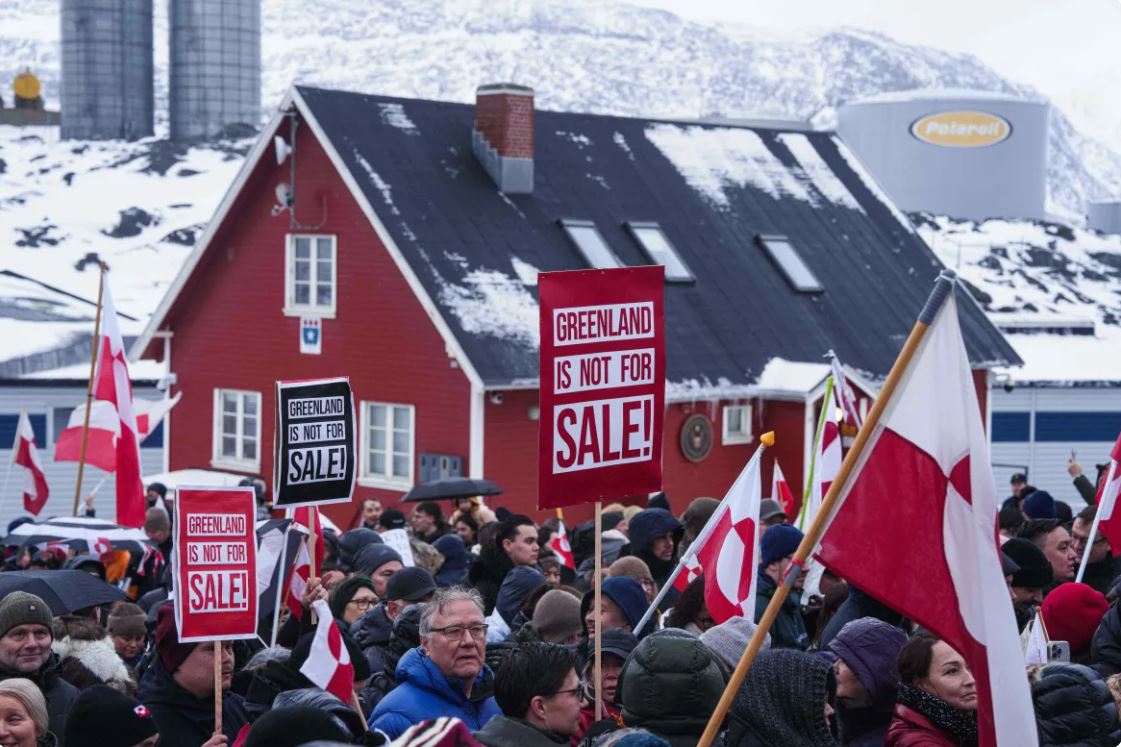
Meanwhile, the human and economic impacts are sharpening into view. For instance, in Greenland’s capital, Nuuk, protesters continue to rally against annexation. This action clearly reflects the will of the vast majority of the island’s 57,000 inhabitants. Simultaneously, industries in targeted nations like Scotland now fear severe consequences. Specifically, business leaders warn of millions in losses from proposed tariffs on key exports like whisky and salmon. Ultimately, this proves that the geopolitical standoff is creating very real economic victims.
Conclusion: A Defining Moment for the West
In conclusion, President Trump’s tariff threat over Greenland is more than a trade dispute. Ultimately, it is a stress test for the Western alliance. In response, European leaders—from traditional U.S. partners to critics—have unanimously rejected what they label “blackmail.” Instead, they stand firmly for sovereignty and international law. Consequently, this episode confirms a more confrontational phase in transatlantic relations. As a result, Europe is now pushed toward greater strategic self-reliance. Therefore, the coming days will reveal if this dangerous downward spiral can be halted. Alternatively, it may mark a permanent recalibration of power within the West. Regardless, one thing is certain: the rules of engagement between America and Europe have changed.
 Read the latest article Here.
For collaboration or to share your own story of faith and inspiration, contact us at eaglewingnews@gmail.com or Call/WhatsApp us on +250 783443274.